Here are a few things we don’t ask about leadership. In rambling fashion. 1) The camera pans on to followers. The leaders words boom out across the stadium. The words light a fire in hearts. Followers are on their feet, clapping and cheering. They scream out their lungs & proclaim their support for the leader and the cause. The scene repeats itself. Everyone is talking about the leader. Nobody asks this about the followers. What life conditions made them turn into followers? On what grounds do they support the leader? If there are grievances that make them rally around the leader, would the leader want to solve those grievances? In the event of success, why is so little known about the numerous actions of followers and so much known about the masterly moves of the leader? 2) The political leaders get on-board the plane. They are going for a leadership development program at a world-famous university. People read the news and watch the news reel, nodding approvingly of the move. Great to have politicians being taught how to lead by people who are…
A fruitful idea for digesting communication
I kept quiet because my words make volcanoes erupt! My wife was boiling with rage. She had been put on a fruits only diet by her doctor. It was tough going. And now she had been given a raw guava by our domestic aide. She demanded an explanation. “Have I ever said I like them raw?” she fumed. Of course, she had never said that. Why did he then do such a thing? You see, it was me. I love ripe guavas. I had specifically told the aide to give me only ripe guavas. Our domestic aide was clear on what I want. If you have a few guavas, and you are told what one customer likes, what do you do about the other customer? Ask the other, right? Yet, he did not do that. I believe even I would not have asked. Here’s why. What would one prefer the situation to be? It is perfect if one customer likes ripe & other likes raw because it is easier to buy & stock guavas when they are at different stages from…
A piece of theatre in the sky
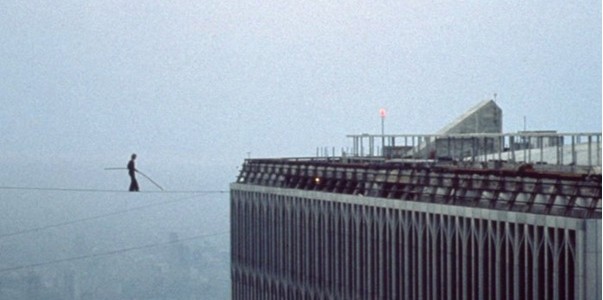
Theatre is the place people come to see the truth about life and the social situation – Stella Adler “What is this guy doing there on the rope? That’s not theatre!” you say. My thought too. But then, that’s how the man in this image, Philippe Petit describes it himself! A piece of theatre in the sky. Staged way back on 7th August, 1974 when Philippe walked the tight-rope between the twin towers of the World Trade Center in New York. Theatre which lasted for all of 45 minutes. Eight crossings. He walked across the rope eight times! No hurry to get to the other end. He sat & even lay down on the rope. He took a bow dangling 1350 feet up in the sky.The camera has captured that dramatic flourish. As he neared the end of the rope, policemen on both sides reached out to apprehend him. He grinned like a mischievous schoolboy & simply turned around on the rope. Who could follow him there?! This was theatre, no doubt, and it was brought to life on the screen in “Man on…
Is not communicating well such a bad thing?
I go to a yoga institute. A few yoga instructors swap schedules for a particular time in a way that makes us experience all of them equally. There is a Thai instructor for whom English is not the first language. She is excellent in caring for our particular needs. And she is very sensitive about in-the-moment attention we all require. I found it a little difficult to pick up her accented English initially. With time, it has become better. All it really required was for me to become an alert & aware listener. When I started paying complete attention, I could understand everything she speaks! The other instructors speak English that is easy to pick up. How does one assess the Thai instructor as a yoga instructor? All instructors are at par with each other in terms of expected competence. They all do their work in a way that leaves everybody content. However, a cursory participant out there for just one day would just make a quiet mention of how he or she struggled to pick up the english accent of the Thai instructor.…
Doing what we love. Not quite.
There is a widespread belief that once we know what we love doing, everything will fall in place for us. I believe it is worthwhile to know who we are first. Rather than figuring out what we love to do. In figuring out what we love,we tie ourselves in knots.We look for a pedestal.We stand our ground to know what we are. That does not mean it is easy. I have taken a long time to know who I am. And my answer takes on subtle shades of meaning when I continue asking. The answer can change, but that is fine. As long as what I do is an outcome of who I really am at one specific point in time, I believe I can cherish the work as a form of self-expression, as a means of contribution. Even if I change later on. I accept everything, including my responsibility for the actions, and their consequences. Of course, what we love matters & matters a lot. And if we truly love something, it is an expression of what we are.…
Innovation & Philosophy – Closer than we think
Want a breakthrough as an innovator? Ask a philosopher! I am forever delighted in knowing how wisdom cuts across boundaries. It is wisdom that spurs real breakthroughs. Consider this: We are more ready to try the untried when what we do is inconsequential. Hence the fact that many inventions had their birth as toys. – Eric Hoffer Eric Hoffer is a philosopher. By all means, people will seek inspiration from the legend of Steve Jobs. And that is good. What about the inner ideals of Steve Jobs; the intangible, unconscious forces within that made him who he became? How can we open ourselves up to experience the same forces? By being open to philosophy. Philosophy explores meaning. Hoffer contributes wisdom ; the meaning that is timeless & universal. Rather than the specific how-to’s of innovation & creativity, it is the uncertain path of philosophy that offers the mysterious something, that can change everything. Hoffer might not have invented anything material, but he contributes something far more powerful: the philosophy that is the creative womb of infinite innovative embryos. What is…
A Drucker quote & the fun a Devil’s advocate has with it!
Only three things happen naturally in organizations: friction, confusion, and under-performance. Everything else requires leadership – Peter Drucker. Here is what the Devil will say! Employee engagement is the oil for easing the friction without removing the cause. Organizational charts are the boxes where confusion is stuffed in. Business analysis is the drainage system for under-performance. Leadership is the art of juggling boxes with oily hands & draining away the tell-tale signs!
If its so bad,why not make it good? A case for learning.
Have you heard this said about a movie,”It was so bad that it was really good!” Many people actually celebrate this ‘so bad,its good’ movies & even make money by spoofing or reviewing it.That is value-creation! People scrounge for value once they accept going in for the experience.As audience in a speech or trainees in a learning event, we can do the same.Why not? What else is there.Can you raise the bar for yourself as a learner.The measure of doing so would be to transcend & go past the ability of the content,process or the trainer.And to create meaning & value by identifying substance!
Individual Brilliance – Sign of something else?
US goalkeeper,Tim Howard made record saves in a WC football match that his team lost.We can see all the action in one frame.We can see the rest of the team didn’t do as well defending & so the last line of defense had to turn in an exceptional performance.In corporate life,outstanding individual performance could be masking collective failure,not so apparent because all the action does not take place in one frame.An outstanding individual performance that saves the day is a sign of systemic concern.
Putting a Price Tag & Losing out on Intrinsic Value – in Life & at Work.
A social experiment in Israel is a good reason to explore the after-effects of putting a price-tag on desired behaviour. Our performance assessment & reward structures are built around paying good money for a job done – on specification. And a penalty or lack of increment for sub-par performance. The system works. Or does it? Here’s what happened. Parents in day-care centres in Israel used to keep anxious kids & a tired teacher waiting well past the pick-up time of 4 pm. They were habitually late. Economists monitored ten such centres for four weeks. On an average, there were eight late pick-ups per week per day care centre. The parents hurried onto the scene half guilty, half worried. Fifth week onwards, they imposed a penalty of 3$ for a more than ten minute delay. The parents were paying $380 per month. By the twentieth week, the average pick-ups per week per day care centre had shot up-to twenty, more than double the original average! Daniel Cohen, French economist puts it well, “There are things we do because we cherish them.…